Installing a home EV charger in Pakistan: what to check before you buy
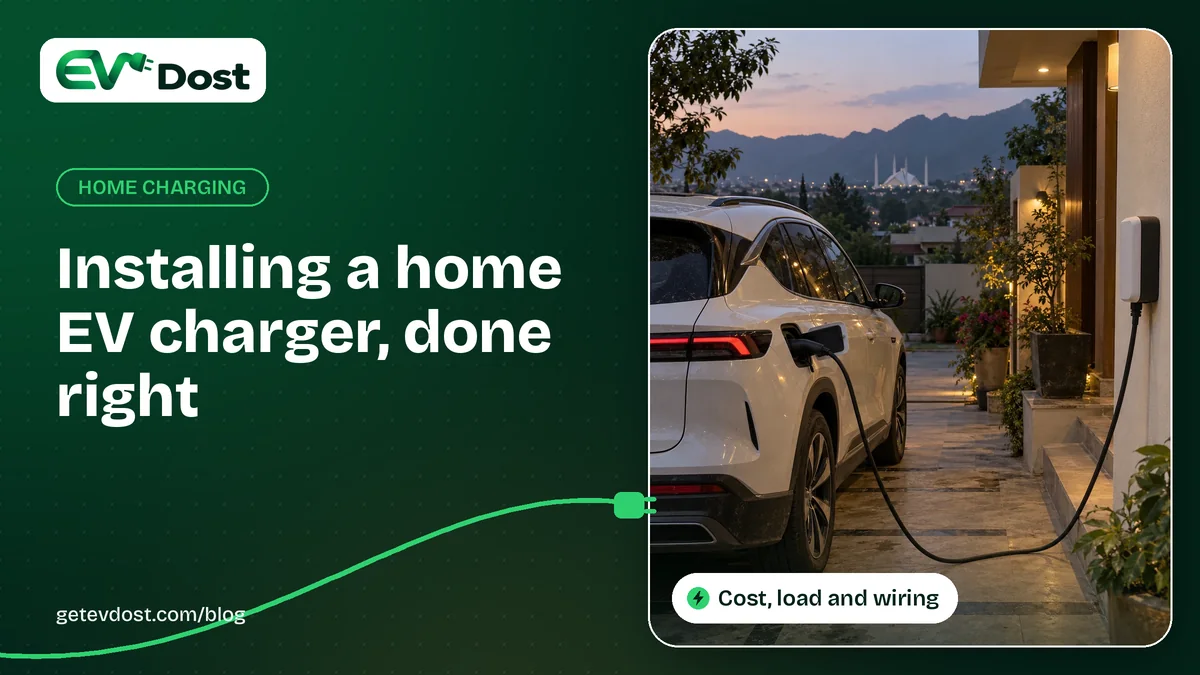
Most electric car owners in Pakistan do the bulk of their charging at home, overnight, while the car would otherwise just be parked. It's the cheapest way to charge and the least effort. You get home, plug in, and the car is ready by breakfast.
Getting there takes a bit of planning, though. The charger itself is the easy part. The questions that decide how smoothly a home EV charger installation goes are about your electricity connection: how much load you're sanctioned for, whether you're on single or three phase, and how far the charger will sit from your distribution board.
Portable cable or wallbox?
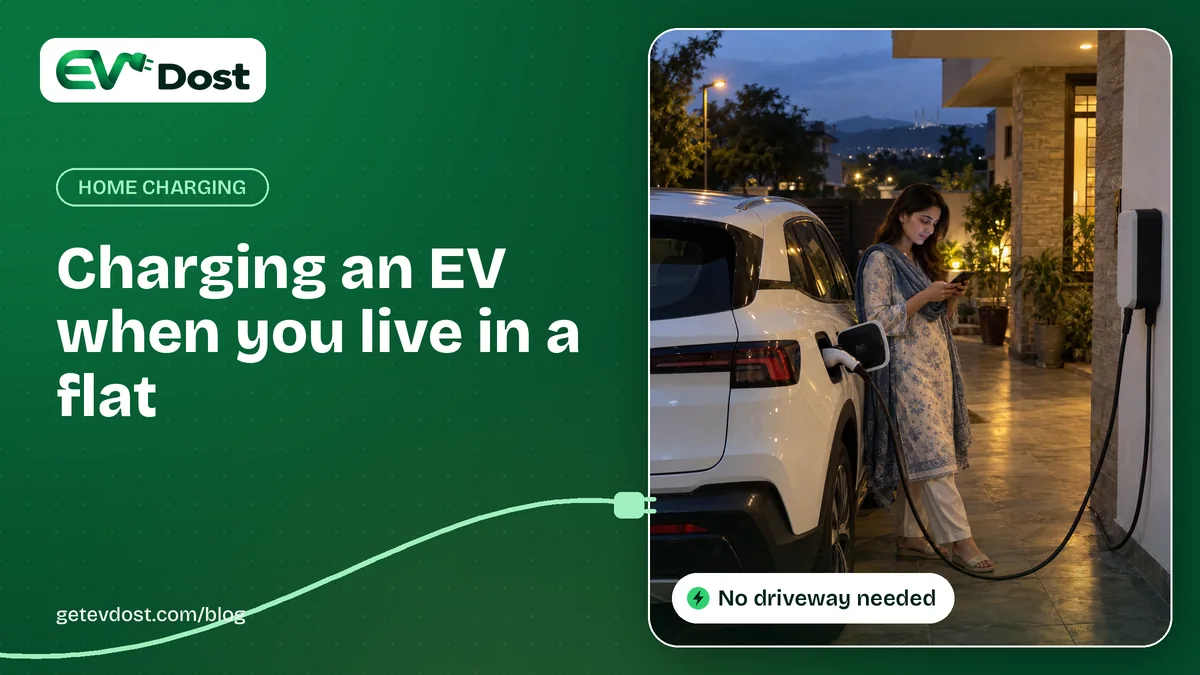
If you live in a flat rather than a house, start with our guide to EV charging in an apartment.
Almost every EV comes with a portable charger, sometimes called a granny cable. It plugs into a normal heavy-duty socket and charges at around 2 to 2.2 kW. That's slow, but for many people it's enough.
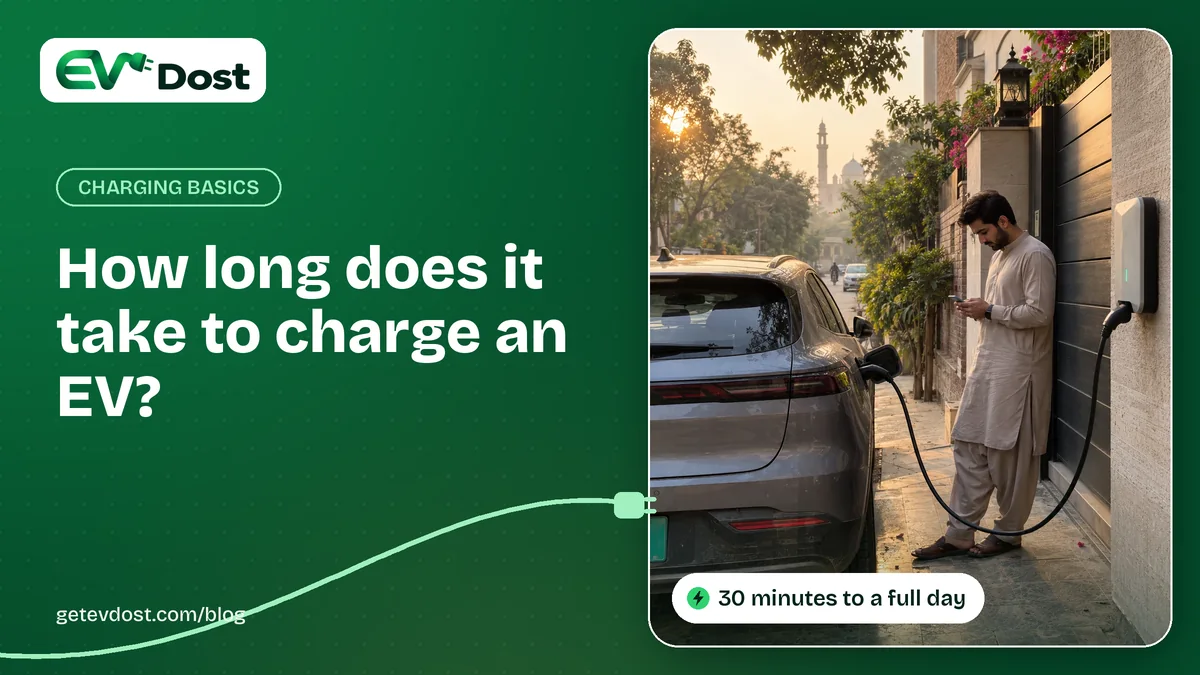
BYD's guidance for its cars in Pakistan puts its 2.2 kW portable charger at 8 to 12 hours for a charge, compared with 4 to 6 hours on its optional 7 kW wall unit (BYD Pakistan). BYD's 8 to 12 hour figure varies by model, though. A PakWheels owner review of the Atto 3, which has a battery of about 50 kWh, lists a full charge at about 25 hours on a 2 kW cable and about 7 hours on a 7 kW charger (PakWheels, May 2025). For a bigger battery, plan on the slow cable taking most of a day from low.
So a simple test: how far do you drive on a normal day? If it's 40 or 50 km, the portable cable will put that back overnight with room to spare. If you drive 100 km or more, or you share the car, a 7 kW wallbox is worth it.
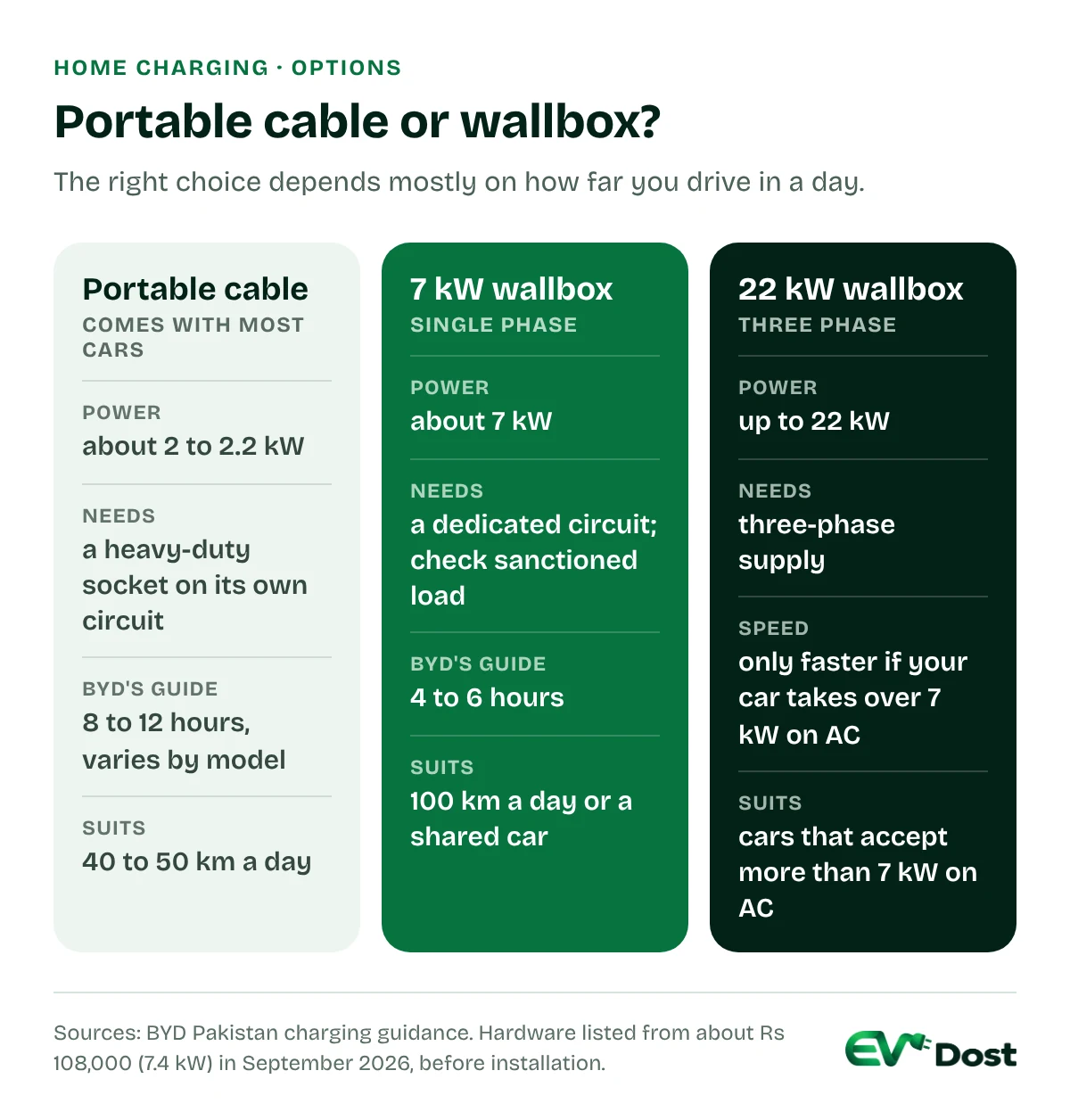
The portable cable needs a proper socket on its own circuit, not an extension board. Running 9 or 10 amps continuously for ten hours is a very different job from boiling a kettle, and cheap sockets and thin wiring get hot.
What a wallbox costs
Prices move a lot with brand and features. In September 2026, one Pakistani retailer listed a 7.4 kW single-phase Type 2 wallbox with cable at Rs 108,000 and a 22 kW three-phase unit at Rs 144,000, and a 7 kW unit from another brand at Rs 285,000 (W11Stop listing). Those prices are for the hardware only.
Installation is extra and depends heavily on your house. The Atto 3 owner in the PakWheels review was quoted about Rs 155,000 for the 7 kW unit installed in 2025. A short run from a modern distribution board in a garage costs much less than a long run across a lawn with new protection gear.
Before you buy, ask your dealer about offers. BYD Pakistan, for example, ran a promotion in August 2026 that included a free 7 kW home charger with installation by an authorised partner, which it valued at up to Rs 250,000 (The News, August 2026). Promotions come and go, but it's always worth asking.
Check your sanctioned load first
This is the step people skip, and it's the one that causes the most trouble later.
Every home connection has a sanctioned load, the number of kilowatts your DISCO has agreed to supply. It's printed on your bill. A 7 kW charger running alongside two air conditioners and a water pump can push a typical house well past that number.
NEPRA's Consumer Service Manual says that when the load on a single-phase meter approaches 5 kW, the DISCO should issue a notice to extend the load and install a time-of-use meter (NEPRA amendment, November 2023). Many homes adding a 7 kW charger will therefore need a load extension.
That isn't bad news. A time-of-use meter can work in your favour if you charge late at night, when off-peak rates apply. But it's better to plan for it than to have it arrive as a surprise notice. Talk to your DISCO, or have your electrician check the numbers, before you order the charger.
What a good installation looks like
Pakistan doesn't yet have a widely published home EV charger wiring code that we could find, so the best guide is the charger maker's installation manual plus a qualified electrician who has done this before. In general, a sound installation has:
- A dedicated circuit from the distribution board, used for nothing else.
- A correctly rated breaker and residual current protection of the type the charger's manual specifies. Many wallboxes have some of this built in; the manual will say what still needs to be in the board.
- Proper earthing. Ask the electrician to test the earth, not just assume it's there. Older houses are often weak here.
- Cable sized for the current and the distance. A longer run needs a thicker cable to avoid heat and voltage drop.
- A sensible location. Close enough that the car's cable reaches the inlet without stretching, out of standing water, and ideally shaded. A wallbox baking in direct afternoon sun in Multan in June will run hotter than it needs to.
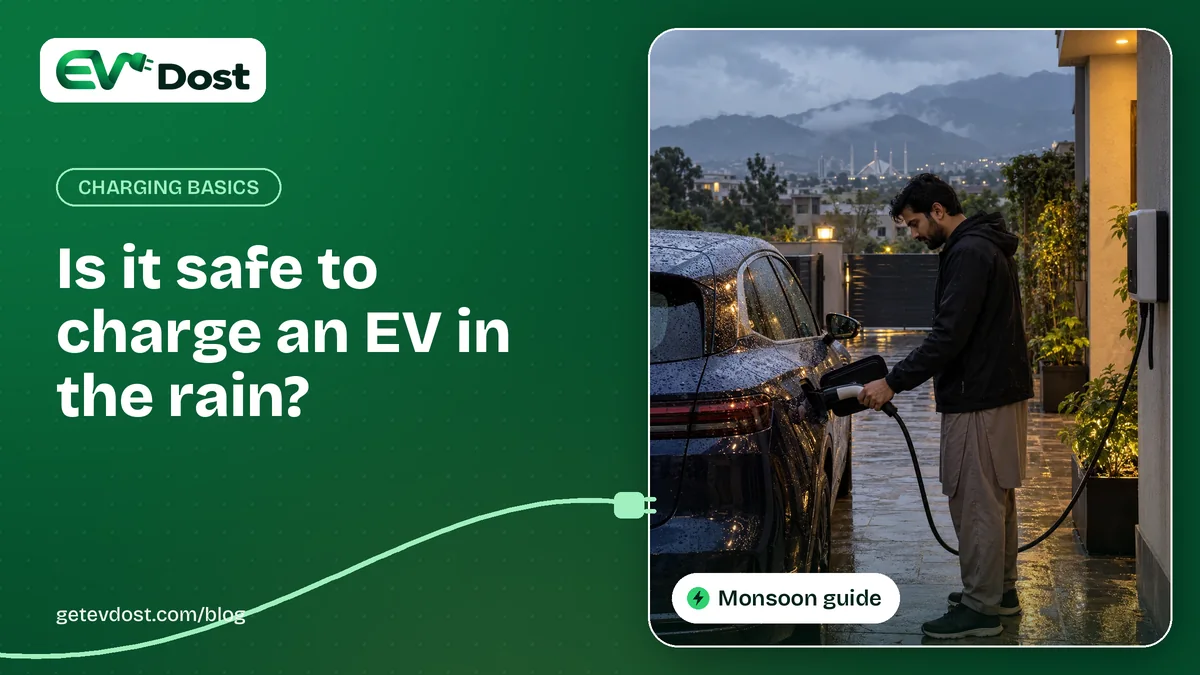
If your charger will be outdoors, our guide to charging in the rain covers IP ratings and protection. Ask for the warranty terms in writing. Some sellers, such as CITA, offer three-year warranties on home chargers (CITA). Confirm whether the warranty requires installation by the seller's own team.
Single phase or three phase?
On single phase, the practical ceiling is about 7 kW. Three-phase supply lets a compatible wallbox run at up to 22 kW.
Before you pay for three-phase specifically for charging, check your car. Many cars sold here accept around 7 kW on AC, so a 22 kW wallbox won't charge them any faster. The BYD Atto 3, for example, is rated at 7 kW on AC and the MG4 at 6.6 kW, according to their spec sheets. A 22 kW unit only pays off if your car (or your next car) can use it.
When load-shedding hits
A wallbox stops when the power goes, and resumes when it comes back. Most units restart charging automatically, but a few need a tap in the app, so check yours once.
Running a 7 kW charger on a home inverter is a different matter. Common household hybrid inverters are rated at around 4 to 8 kW, which usually can't carry a wallbox on top of the house. We cover this properly in charging an EV during load-shedding.
Let your charger earn its keep
Your wallbox will sit idle for most of the day. If you're comfortable with it, you can list it on EVDost, choose the hours, and let nearby drivers charge at an hourly price you set. Our guide on earning from your EV charger walks through how it works and what to charge.
Quick checklist
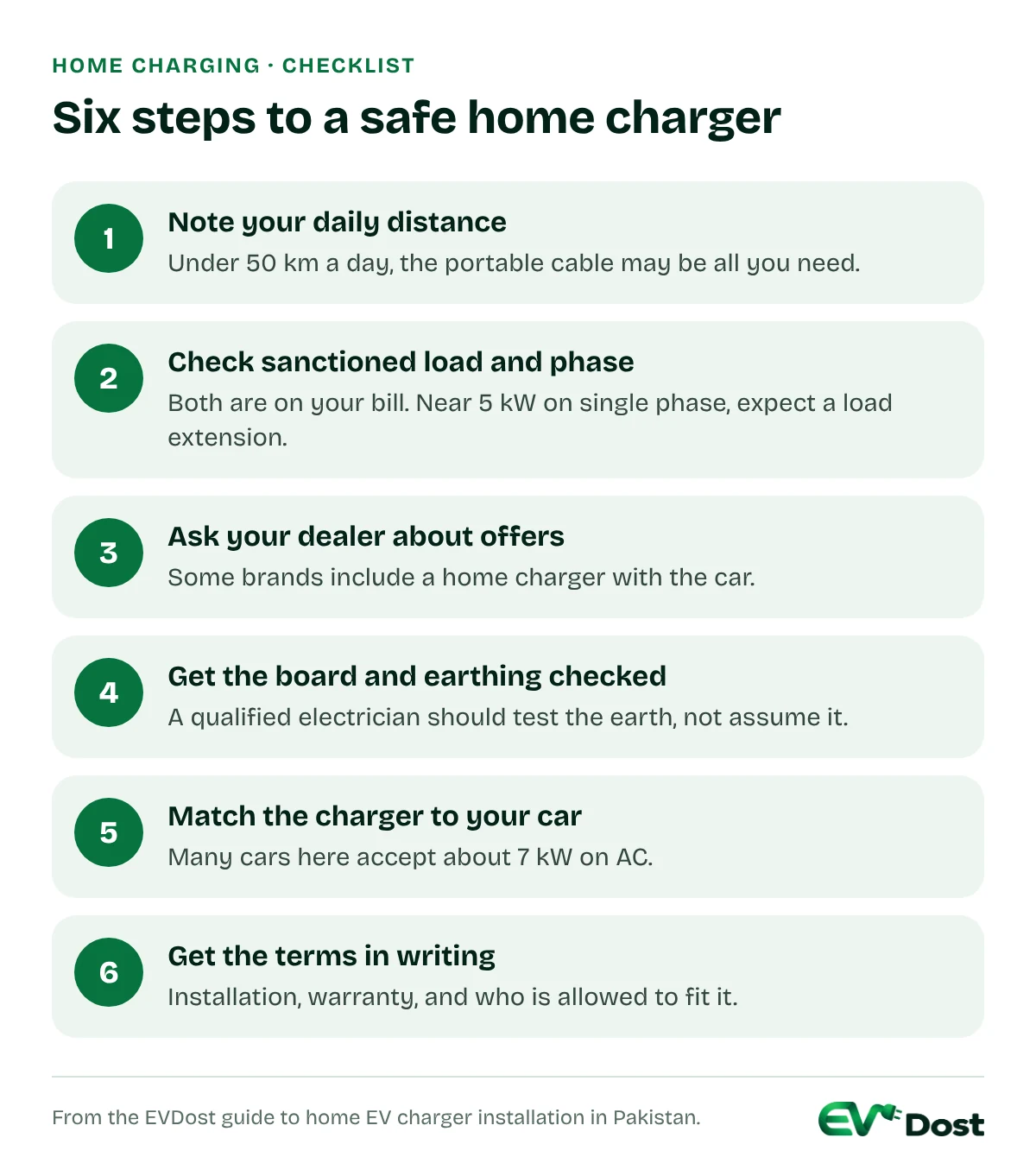
- Note how far you drive on a normal day.
- Check your sanctioned load and phase on your electricity bill.
- Ask your dealer about included or discounted chargers.
- Get a qualified electrician to inspect your board and earthing.
- Pick a charger rated for what your car can accept.
- Get the installation and warranty terms in writing.
Frequently asked questions
How much does a home EV charger cost in Pakistan?
In September 2026 one Pakistani retailer listed a 7.4 kW single-phase Type 2 wallbox at Rs 108,000 and a 22 kW three-phase unit at Rs 144,000, hardware only. Installation is extra and depends on your house; one Atto 3 owner was quoted about Rs 155,000 for a 7 kW unit installed in 2025. Ask your dealer too: BYD included a free home charger with cars booked in August 2026.
Can I charge an electric car from a normal socket in Pakistan?
Yes, with the portable cable that comes with most EVs, at about 2 to 2.2 kW. Use a heavy-duty socket on its own circuit, never an extension board, because the cable draws 9 or 10 amps for hours. It's enough for 40 to 50 km a day.
Do I need to increase my sanctioned load for a home EV charger?
Often, yes. A 7 kW charger plus air conditioners and a pump can exceed a typical home's sanctioned load. NEPRA's Consumer Service Manual says that when load on a single-phase meter approaches 5 kW, the DISCO should ask you to extend the load and install a time-of-use meter.
Do I need three-phase power to charge an EV at home?
No. Single phase supports about 7 kW, which is the most that many cars sold in Pakistan accept on AC (the BYD Atto 3 is rated at 7 kW and the MG4 at 6.6 kW). Three phase only helps if your car accepts more.
Does a wallbox restart after load-shedding?
Most wallboxes resume charging automatically when power returns, but a few need a tap in their app, so test yours once. A typical 4 to 8 kW home inverter usually can't run a 7 kW wallbox as well as the house.
Sources
- BYD Pakistan charging guide: byd-mega.com
- PakWheels, owner review of the BYD Atto 3 (May 2025): pakwheels.com
- W11Stop, home EV charger listings (September 2026): w11stop.com
- The News, BYD free home charger promotion (August 2026): thenews.pk
- NEPRA, amendment to the Consumer Service Manual (November 2023): nepra.org.pk
- CITA EV chargers: noti.st
- BYD Atto 3 spec sheet: byd-mega.com; MG4 EV brochure: mgmotors.com.pk